The heart, in one line: don't duplicate the world every time someone disagrees with it. Our sweep identified this — rival interpretations kept as first-class entities — as the property that best distinguishes BH from the approaches evaluated; we give it a working name: FCIR. Provisional conclusion: the universal-paradigm claim was not confirmed, and FCIR already exists in RDF named graphs and standoff annotation — judge it as a synthesis, not an invention.

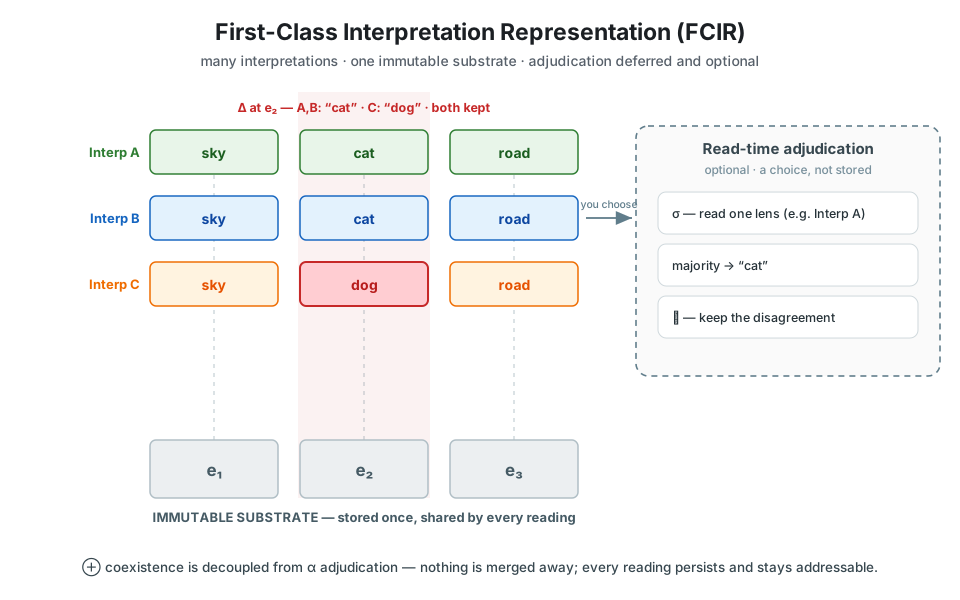
Same model, as text
   Interp A (alice):  sky   cat   road     coexist · co-registered · first-class
   Interp B (bob):    sky   cat   road
   Interp C (carol):  sky   DOG   road     (disagree at e2 — both kept)
                       |     |     |
   substrate:          e1    e2    e3       immutable · stored once
                             |
       read-time adjudication (OPTIONAL · not stored):
          one lens   ·   majority -> "cat"   ·   keep the disagreement
What makes it different — and what doesn't
Storing a substrate once and reading it selectively is already mature SOTA (DICOM, COG, lakeFS, S-LoRA…) — BH does not claim that. A 20-domain sweep found the FCIR still under-explored: the same model held across four very different prototypes —
| instance | domain | the same model, instantiated |
|---|---|---|
bhanno | rival annotations | K labelings coexist, adjudication optional — the purest |
bhmem | agent memory | conflicting versions over one history |
bhckpt | model checkpoints | alternative readings of one shared base |
bhtrace | traces | competing lenses over one span tree |
Where it helps most (honestly): preserving annotator disagreement in ML — keeping every reading first-class instead of collapsing to one gold label ("learning from disagreement"). See the Conclusion.
Don't duplicate the world every time someone disagrees with it.
DOI: 10.5281/zenodo.20821058